The RTX PRO 6000 Arrived, So Naturally We Gave It 262,000 Tokens of Context
A 96GB Blackwell card, a 27B local model, and enough concurrent working memory to stop treating every serious task like contraband.
There’s a particular moment in a home lab project when it stops being practical and becomes interesting.
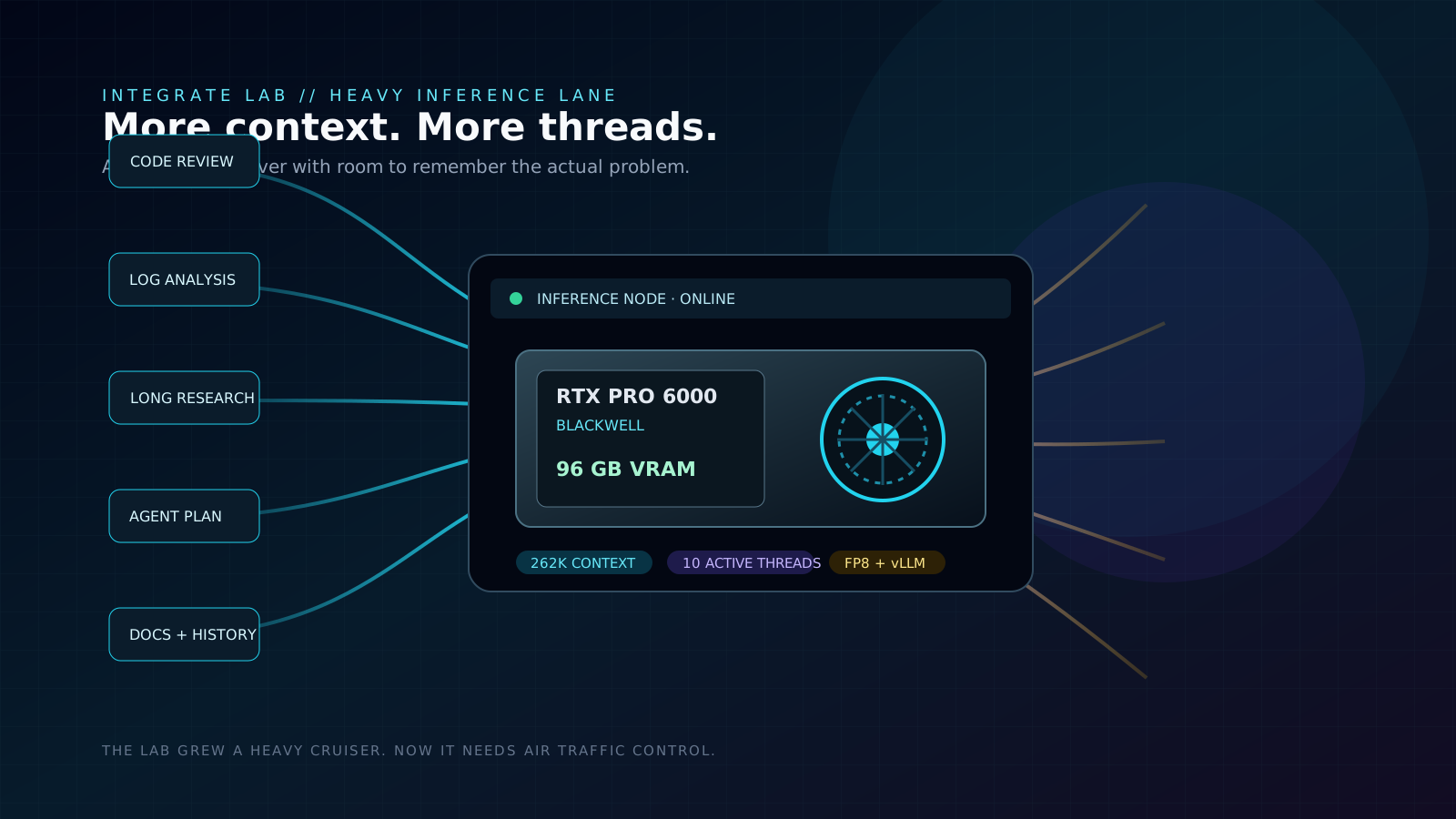
For us, that moment was looking at an RTX PRO 6000 Blackwell with 96GB of VRAM and thinking: right, let’s see how much of a problem it can remember at once. Then let’s give it several problems.
A normal person might use this card for rendering, simulation, CAD, or training models. We put Qwen3.6-27B-FP8 on it, served it through vLLM, gave it a 262,000-token context window, and configured it to handle up to ten concurrent requests.
That is enough room for a serious pile of code, documentation, logs, old decisions, failed experiments, and at least one file called final-final-actually-use-this.conf.
The card now runs as the lab’s heavy inference lane. It exists for jobs that need more than a clever answer and a brisk nod.
Why such a large context window?
Because context is where local AI starts becoming useful.
Small-context models can be brilliant, but they make you play logistics officer. You trim documents, summarise old discussions, remove logs, and decide which fragments of reality deserve to survive the next prompt.
It works. It is also like sending a repair crew to a ship with half the maintenance manual and a Post-it note saying, “engine weird, probably fine.”
With 262,000 tokens, the model can hold much more of the actual problem: architecture docs, source code, configuration, issue history, test failures, meeting notes, and the ancient workaround that accidentally became core infrastructure.
It does not make the model omniscient. Large language models remain quite capable of confidently walking into a rake. But it gives the model fewer excuses to invent the missing part of the story.
One GPU, multiple trains leaving the station
The other important number is not the context window. It is concurrency.
The RTX PRO 6000 is configured to serve up to ten simultaneous requests. In practice, that means several active threads of work can make progress without turning the whole lab into a polite queue behind one very large prompt.
One agent can be reading a codebase. Another can be analysing logs. A third can be drafting a plan, reviewing a change, or chasing down a configuration problem that has somehow survived three migrations and a change of operating system.
They are not all getting the GPU’s full attention at once, obviously. Physics has retained senior management approval. But vLLM can continuously batch work across those requests, keeping the GPU busy and letting multiple jobs move forward rather than processing every task as a single-file procession.
That changes the feel of the system. A single local model is a workstation: give it a task, wait for it to finish, then hand it the next task. A high-memory inference lane with concurrent request capacity starts behaving more like shared infrastructure.
The VRAM situation
Long context is hungry. Multiple concurrent long-context requests are hungrier still.
The model itself needs memory, then the KV cache grows as documents, code, and conversation accumulate. Give a model a huge context window and it consumes VRAM with the calm determination of a Labrador near an unattended roast chicken.
Now add several active threads. Each needs its own working memory. Suddenly, the hardware is not just holding a model, it is holding several partially completed investigations at the same time.
Usually, that forces compromises: reduce the context, use a smaller model, quantise harder, limit concurrency, or push work onto the CPU and wait for the whole experience to acquire the pace of a council planning process.
The RTX PRO 6000 gives us room to avoid most of that. Its 96GB of VRAM lets us run a capable 27B model in FP8, preserve a very large context window, and support multiple active requests while keeping the work on the GPU.
vLLM handles much of the unglamorous machinery: efficient KV-cache management, Flash Attention, continuous batching, and the operational bits that separate “I got this running once” from “this is usable on a Tuesday.”
Tokens per second are not the whole story
Local AI benchmarking loves tokens per second. Fair enough. It is measurable, screenshot-friendly, and makes hardware enthusiasts briefly forget their electricity bills.
But it is only one number. For agent work, the better questions are: can the model see enough of the problem to make a sensible decision? Can it retain the code, docs, plan, logs, and failed attempts long enough to finish the job? Can several useful tasks make progress at once without one long prompt holding everyone else hostage?
A fast model with no room to remember the actual task is still fast. So is a forklift with no pallet.
The fleet is the actual project
The RTX PRO 6000 is the heavy cruiser, not the entire fleet. Other machines in the lab handle faster, lighter, cheaper, or stranger workloads. Some are better for quick responses. Some are testing grounds for model formats and inference runtimes. Some exist because AMD GPU inference remains an expedition into a region marked “here be drivers.”
The useful move is not finding one giant model to do everything. It is routing each job to the machine that suits it.
A quick classification task does not need the Blackwell lane. A long-running code investigation probably does. A lightweight assistant can stay on a faster, smaller model. The big card gets the missions that justify waking the reactor, especially when several of those missions need to run at the same time.
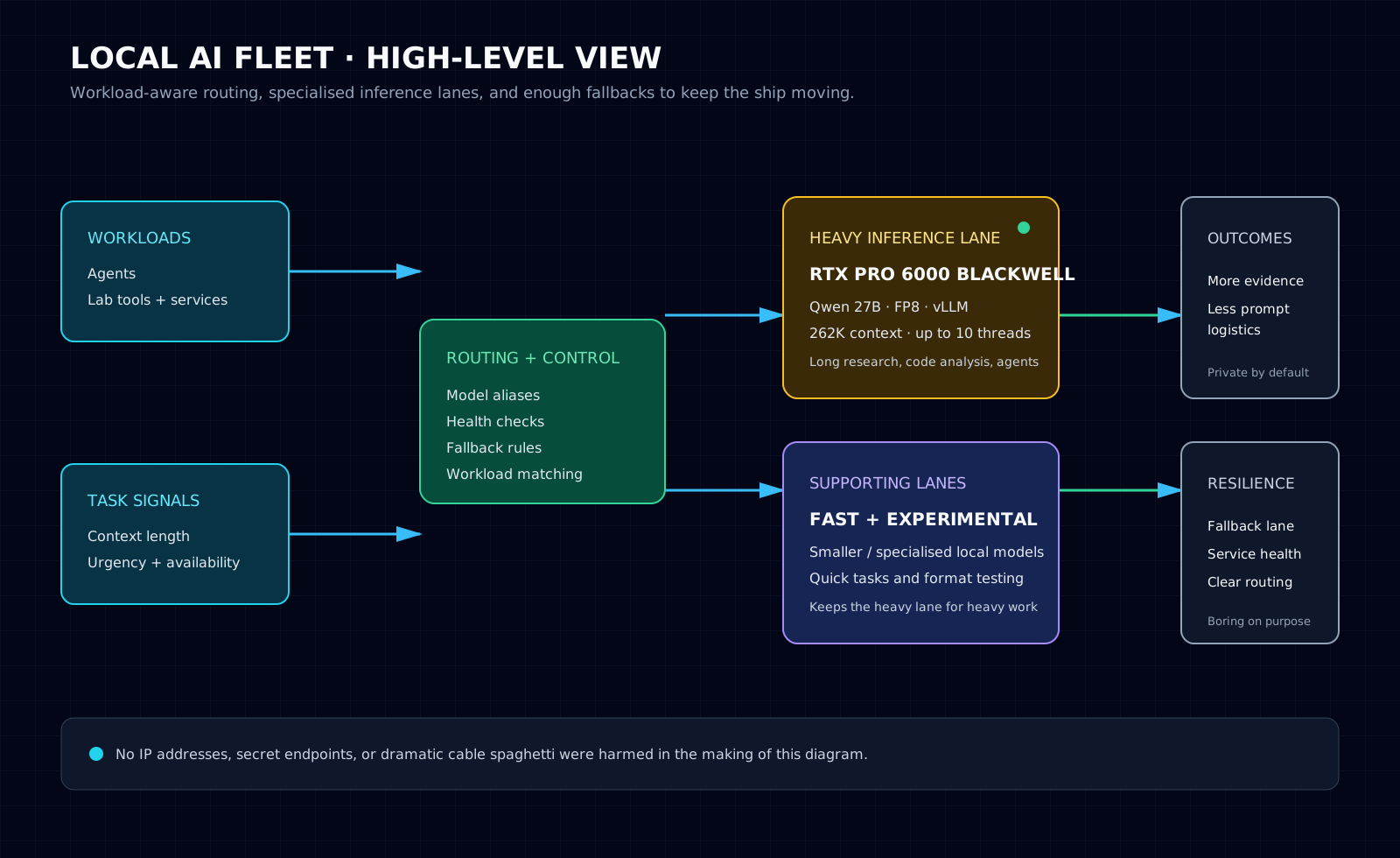
A deliberately high-level fleet map. The cables, endpoints, and occasional bad decisions remain safely off-camera.
What comes next
The next job is making this less dependent on someone remembering which endpoint does what. Better health reporting. Clearer aliases. Workload-aware routing. Reliable fallbacks when an experimental model server decides it needs to rediscover itself.
The goal is not a novelty chatbot with an expensive power draw. It is a local service that can take messy, real-world tasks, work through more of the evidence, and return something useful without immediately handing documents, code, or half-finished thoughts to somebody else’s cloud.
The RTX PRO 6000 is a large step toward that. It gives the lab enough memory to hold more of the problem, and enough headroom to keep multiple threads of work moving.
Also, it has 96GB of VRAM. That remains objectively ridiculous, and now several agents can be ridiculous with it at once.